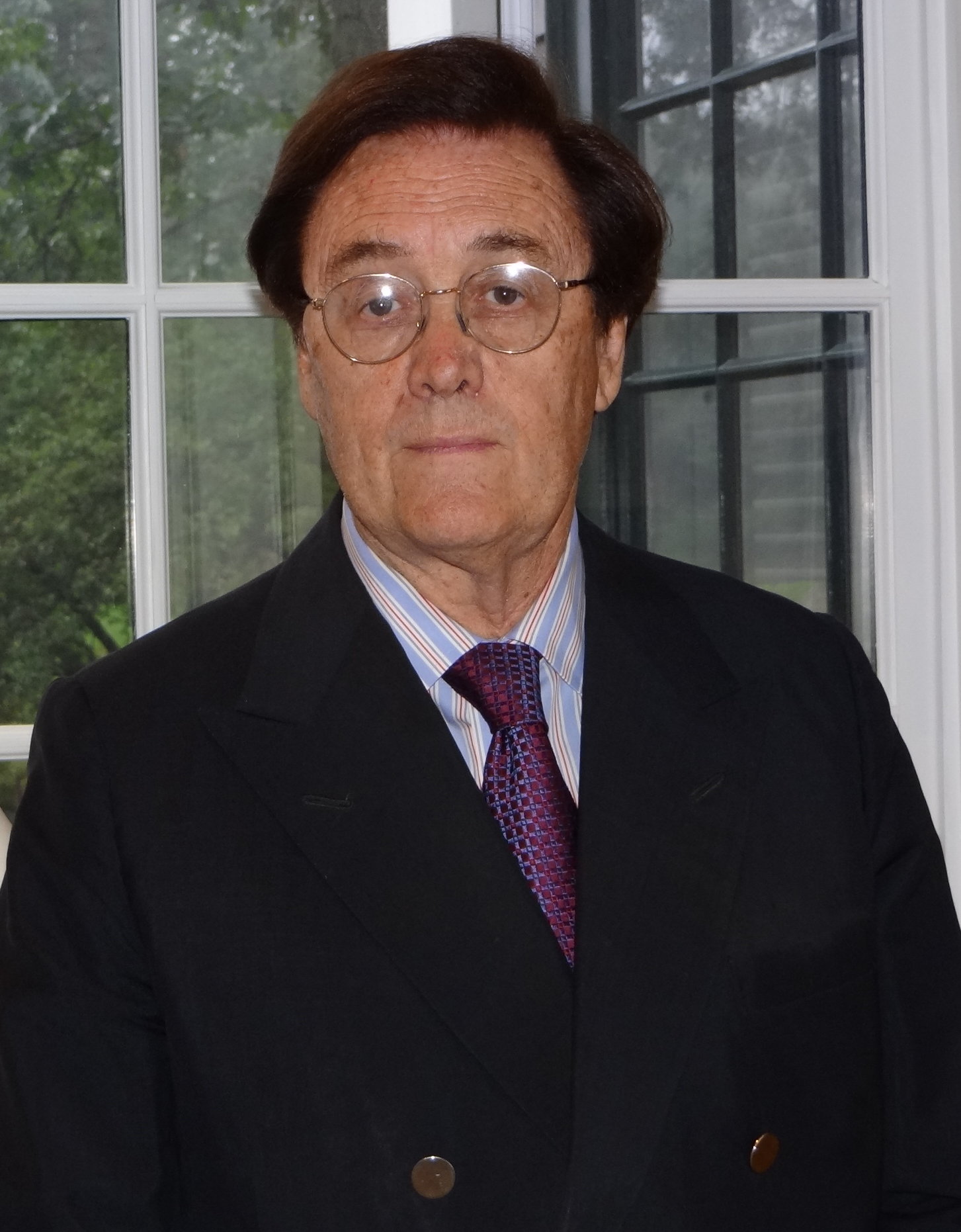
- H.W. Brock, PhD
President
Are you fed up with information overload? Are you disturbed by your inability to interpret the news better than others? Are you frustrated by the Tower of Babel of modern financial economics, with some claiming that markets are efficient, and others that they are not? Then you should view SED's Advisory Service as an antidote to these symptoms of investor distress.
- H. "Woody" Brock, President
The Goal of SED's Advisory Service -- Implementing a New Research Philosophy of How to Outperform the Market
Our principal goal is to ensure that our clients are less wrong than the consensus for the right reasons, and can thus earn consistently higher returns. How is it possible to be less wrong than the consensus when markets are supposedly "efficient"? There are three logically defensible ways of doing so:
1. Investors can identify and exploit those "structural changes" that occur over time and render forecasting so difficult--the rise of OPEC, the advent of China, the 2007 implosion of global credit markets, etc. Think of these changes as those "curve balls" that history throws at investors attempting to cope with new economic, political, and demographic regimes. Investors who understand such developments sooner and better than others will end up less wrong than the consensus, and will thus reap excess returns. SED is the leader in identifying and exploiting structural changes on behalf of its clients.
2. Investors can avoid making fundamental mistakes that arise because of widespread misunderstandings about the counter-intuitive behavior of how the economy and financial markets actually work, as opposed to the way in which they work in textbook models. For example, it is universally assumed that, when foreign investors no longer wish to invest in the US, the result will be a lower dollar and much higher interest rates. But it turns out that this assumption is wrong in both theory and practice. Since foreign investors as a whole cannot in fact "pull their money out of the US" for reasons that are highly counter-intuitive, interest rates do not get driven up. Rather, the dollar gets driven way down. Developments between 2007 and mid-2008 offer an excellent example of this point. SED is the leader in identifying such errors of inference.
3. Investors can exploit what researchers at Stanford University now call "endogenous risk"--a.k.a., market misbehavior. Markets periodically misbehave in the sense that price changes become disproportionate to news about fundamentals. New research has made it possible to know when and why market misbehavior arises. We at SED have pioneered the applications of this important new research for investors trying to cope with everything from the stock market crash of 2000-2002, to the Emerging Markets shock of May 2006, to the collapse of the dollar between 2005-2008, to the credit market turmoil of 2007/2008. No other research service addresses the topic of endogenous risk.
Squaring this Philosophy with the Efficient Market Theory
In the past two decades, the Efficient Market Theory was extensively tested, and was found to be highly deficient in its ability either to explain or to predict market behavior. The fundamental reason for this failure has recently been unearthed by research at Stanford University. This was the failure to distinguish "information" (news) from the interpretation of such news.
More specifically, the Efficient Markets Theory predicted that, since all investors in today's Bloomberg age now obtain the same information at the same time, the only way for a given investor to outperform others will be to be more lucky. But this is wrong. For in an age of ongoing structural changes (e.g., the rise of China), what matters is not the consensus. The hallmark of SED's philosophy is to equip its clients with the theories that make superior interpretation of the news possible. In this regard, Einstein was indeed correct: "I like good theories. They work better." So do we.
Now please select Services or Testimonials to learn more about our products and services.